


Gialova Messinia is a coastal village in an important historical site in Navarino Bay, north of Pylos. Next to the beach is Gialova, which is actually two beaches—Golden Beach, marching alongside the lagoon and wetland, and Gialova itself, the beach, which offers a lot of shade along with many bars and taverns. The wetland of Yalova (Divari) is of particular ecological interest as a milestone of many migratory birds. In this rarely found species of birds, such as herons and flamingos, ospreys, Black-winged Stilts, avokettes, sandpipers, snipes, curlews, tartarics, terns, and the only kind of chameleon in Europe. The African chameleon changes color depending on his mood.
The wetland of Gialova is a protected area since there are species that belong to the Greek endangered fauna.
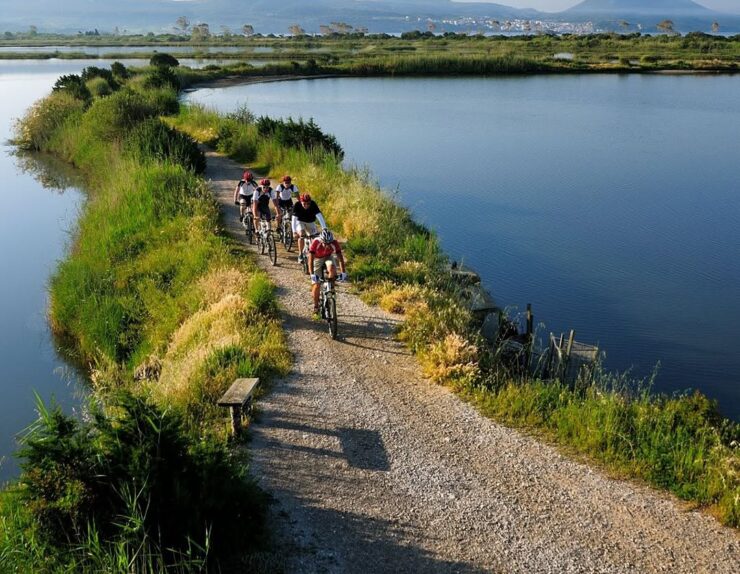
Γιάλοου, Gialova _Lagoon, wetland
The unique birds are enchanted with strange silhouettes, with their towering legs, long and weird beaks, and thin and flexible necks. And excite the visitor with the slow dance moves and lure them at their own pace.
Between the wetland and the sea behind Sydentra junipers and Moschomyrista thyme lies another surprise: Voidokoilia, a perfectly round beach framed by undulating dunes.
Continuing on the main road, after Fennel, it will reach a fork. A straight road leads to the castle. At the top of a steep rock-the ancient Koryphasio with stunning views of the surroundings-is the first castle of Pylos, built by the Franks in 1278.
You can climb this far (walking); only some of the points in the heart of the castle need attention. If you turn left, you will hit the Information Center that was created in an old pumping station on the shore of the lagoon Gialova, the Greek Ornithological Society. Open every summer from mid-June to mid-September (19.00-22.00) by distributing information material and organizing tours in wetlands. Besides the exhibition, it is the starting point for a visit to the “Nature Trail” and ecological tours for bird watching with equipment (binoculars, telescope, etc.) available to the HOS. To visit schools and other organized groups of visitors in the area, please contact the Program Coordinator Pylos Mr. George Maneas (tel. 6979809570, gialova@ornithologiki.gr).
Specifically, the lagoon is a natural wetland, which, although recently has undergone a relative decline, joined the program Life Natura 2000 to protect the area.
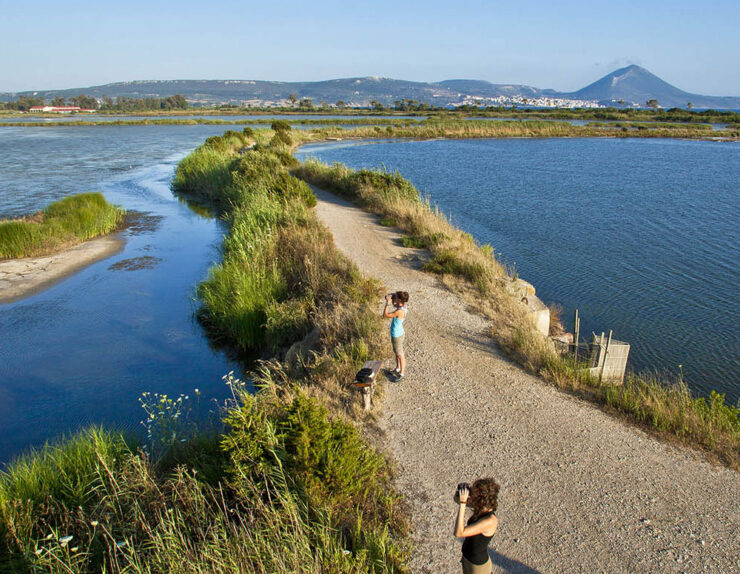
Gialova Lagoon, wetland
It is a brackish habitat with a total area of 2,000 hectares, which receives the inflow of seawater and fresh water from rivers and Tyflomyti Xerolagkado, which find safe shelter for many species of migratory birds during their passage to the south.
Some of the breeding species observed by the Observatory of the PBC are the Bittern, the Short-toed Eagle, the Stilt, the Little Tern, the Alkyoni, and the Pratincole.
Also have been found on passerine birds such as Cormorants, Glossy, purple herons, flamingos, swans, prey like vultures, buzzards, ospreys, peregrines, gulls, and wading birds such as Avocets, Spoonbills, Curlews, Golden Plovers, Potamotringes, such as Nocturnal Owl, Barn Owl, Nanompoufoi , and various songbirds such as blackbirds, blue rock thrushes, goldfinches, orioles, grouse, monks, galazopapaditses, flycatchers, tsirovakoi, warblers, pampola sparrows, and magpies.
The turquoise waters of the lagoon are absolutely calm, mirrored and reflected in the surrounding areas. In these clear waters bred various fish species.
Walking on the edge of the lagoon we saw in the water, crabs and various reptiles such as chameleons, lizards, turtles, and snakes took refuge inside the scattered shrublands and often surprised us by dragging them into the tranquility that prevailed.
This beautiful ecosystem attracts many visitors, schoolchildren, and volunteers approaching the room not only for the knowledge and awareness of respect and love for the natural environment but also to enjoy moments of calm and relaxation, and a representation of colors and sounds is a unique aesthetics.
If traveling by boat, then you will find a safe haven in the marina of Pylos (tel.: 27230 22225).


