


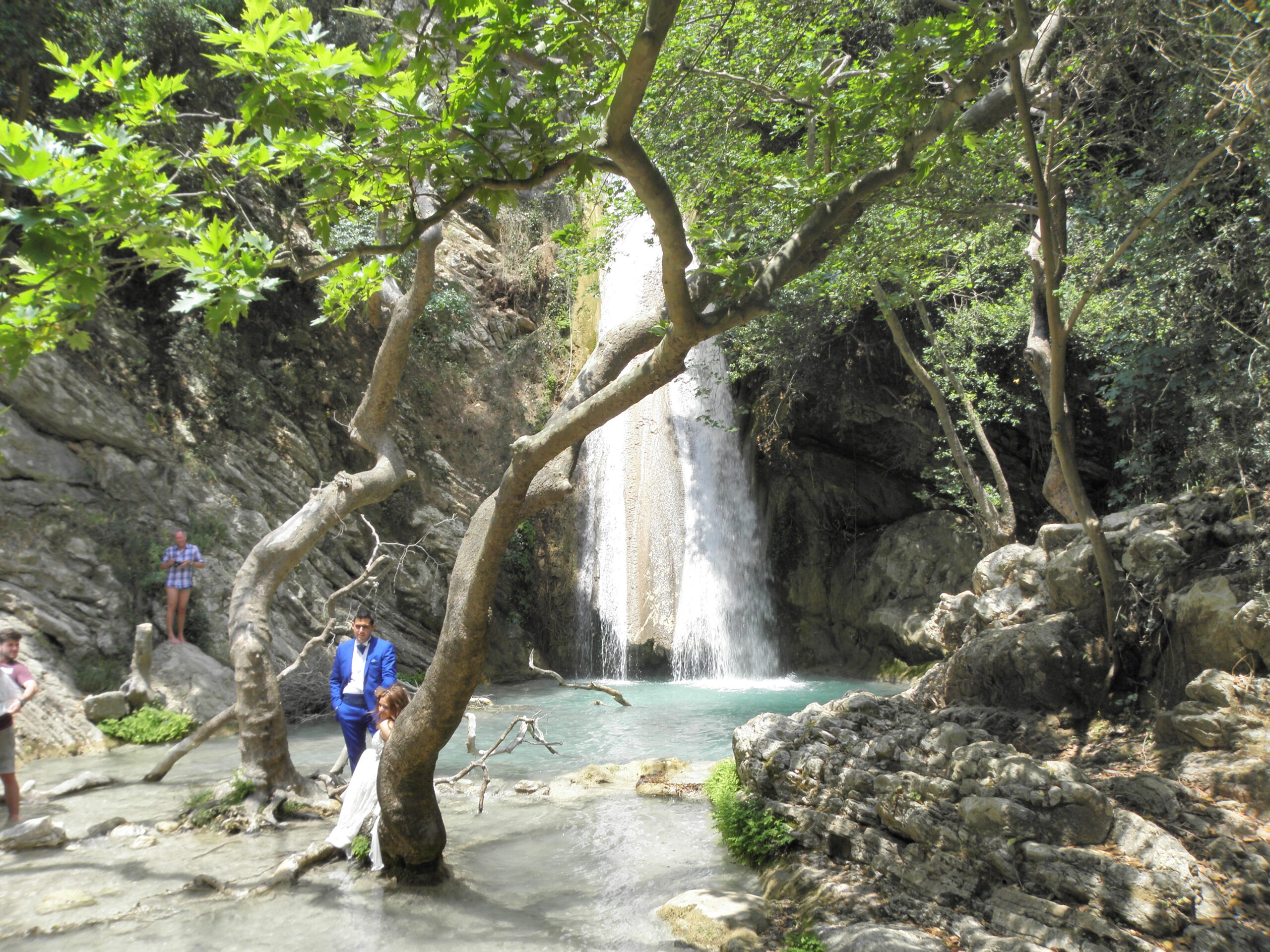
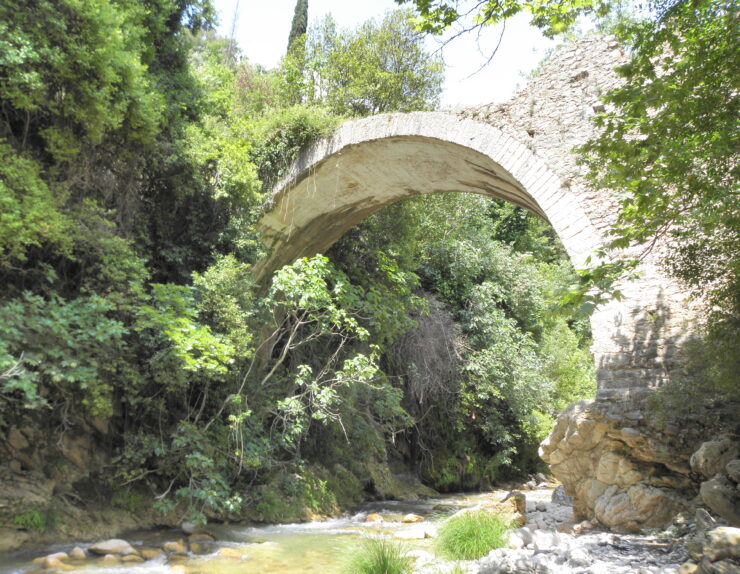
Neda waterfalls- Stone Bridge
It is highly recommended to make an excursion to Neda Waterfalls for swimming at the beautiful blue lagoon. Surely Kalo Nero’s trademark is Neda, the famous river that travels you to the Greek Mythology or the way of your dreams. The river hides a huge variety of pictures: torrents, tributaries, ravines, hills with luxuriant vegetation, idyllic lagoons, the canyon of incredible beauty, the dark cave (Stomio) with bats, small or big waterfalls, arched bridges… everything is impressive! Every year it attracts plenty of people to adventurous, enjoyable trekking.
https://www.youtube.com/watch?v=d78iWMbSjN0
The only river with a feminine name, sometimes unruly, sometimes calm, but above all charming, rolls and lost in deep caves and wants a way to conquer it (like a female that is). Neda, who gave his name to the river, was a water nymph and river god and one of the three feeders of Jupiter. The dramatic waterfalls of the river appear unexpectedly, forming lakes with crystal-clear waters and causing a dip to feel cleansed. The river Neda is the natural boundary of Ilia and Messinia. The headwaters of the river are located in Mount Lykaion, near the village of Petra, and the long aquatic journey travels around 32 km before forever ending with the blue waters of the Ionian Sea in Elea near Kyparissia. Nearby is the traditional Andritsena.
According to legend, when Rhea gave birth to Zeus, she gave the nymph Neda, goddess of the waters, to protect him from the man of Saturn. She nursed the infant along with nymphs, and Theisoa Agno bathed and washed the headboard in Lykaio, which later became the legendary river that got its name. Also, according to the mythology associated with Neda Demeter, Persephone and Pluto.
The canyon of Neda, which runs through the namesake river, is a rare and yet unexplored until recently corner of Greek nature. The constant changes of scenery, lush vegetation, huge river stones into the light green waters, and the majestic rocks make its wake a true challenge and delight the visitor.
The canyon is accessible during the summer months, while the beauty of the scenery is composed of olive trees, fig trees, oaks, and holly. At various points of the course there are a total of three waterfalls that lead to small lakes. A slope is the church of Panagia and just above the recess, where, according to tradition, was the miraculous image. Just below is the spout.
The tunnel Stomio has two levels, one at the height of the bed and another, higher, that seems like a gallery where stood the old riverbed, while the form of cave is due to the low temperature of the water sources that run from the sky tunnel and is home to thousands of wild pigeons and bats. Before entering Stomio in 100 meters. The riverbed of Neda crumples the foaming waters of the famous waterfall Figalias of 50 m, which emerges from an impressive gorge that is defined by the grotesque-like hanging rocks that spear imperious heaven. Right and left towering verdant hills and mountains are offshoots of the Lyceum of legal and Kotilou, while about 30 springs and headboards gush and enrich the river with crystal clear waters, giving power to several mills, which are still deserted on the banks of the river.
Walking at the shore needs attention because of slippery moss on the stones, extensive dense vegetation, and a lack of pathways, while at several points it is necessary, and after swimming in the river, several lakes.
Every year in August, local bodies and nature groups organize a two-day hike in the bed of Neda. Starting from its sources at Petra, continue to Kakaletri and Marina, arrive at Platania, and from there go to Spout. After you go through the canyon Figalias and complete the hike reaching the mouth after a 15 km route swimsuit, and sneakers are necessary, and … good crossing!
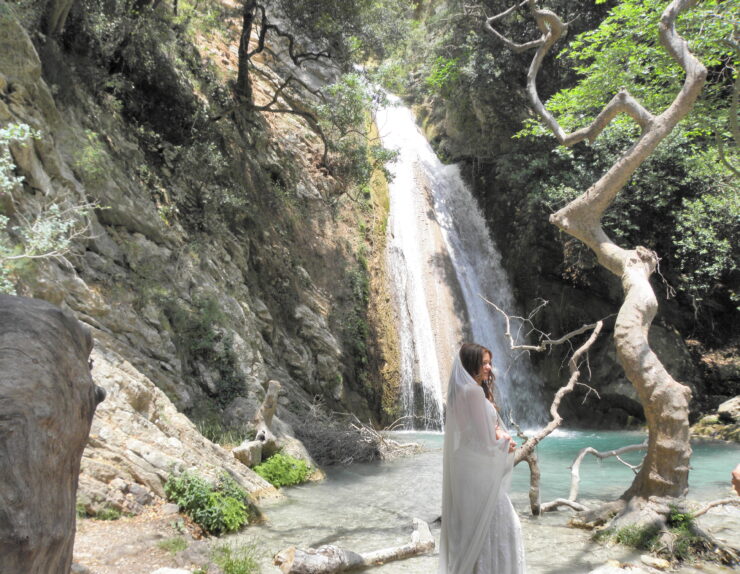
Neda waterfalls- Bride
Picturesque villages on the slopes of the valley have linked their story with the waters of the river. Sites that hosted great cultures, splendid monuments and sanctuaries, glorious battles and exploits, and feats welcoming and dear ones, who were beautified by human toil. Neda and villages maintain a rare, exotic beauty, giving the word “recreation” meaning and substance, shiny gems of Greek nature at its best.
In Ancient Figalia was a tributary of Neda called Lymax (contemporary locals today say Lymaka, the stream from near the village of Dragogi). The name of the tributary comes from Mythology. When the nymphs did Rhea’s cleansing after the birth of Zeus, they threw there the sewage of expiation. Near the point where the Lymakas joins Neda was then the sanctuary of Eurynome, inaccessible and drowned in cypress. The sanctuary opened only once a year, and the statue Eurynome was wooden, bound with golden chains, and depicted a naked woman as the waist that, from the waist down, had a fish tail, since Eurynome was the daughter of Oceanus.


