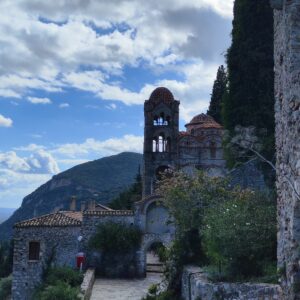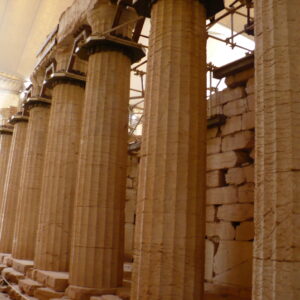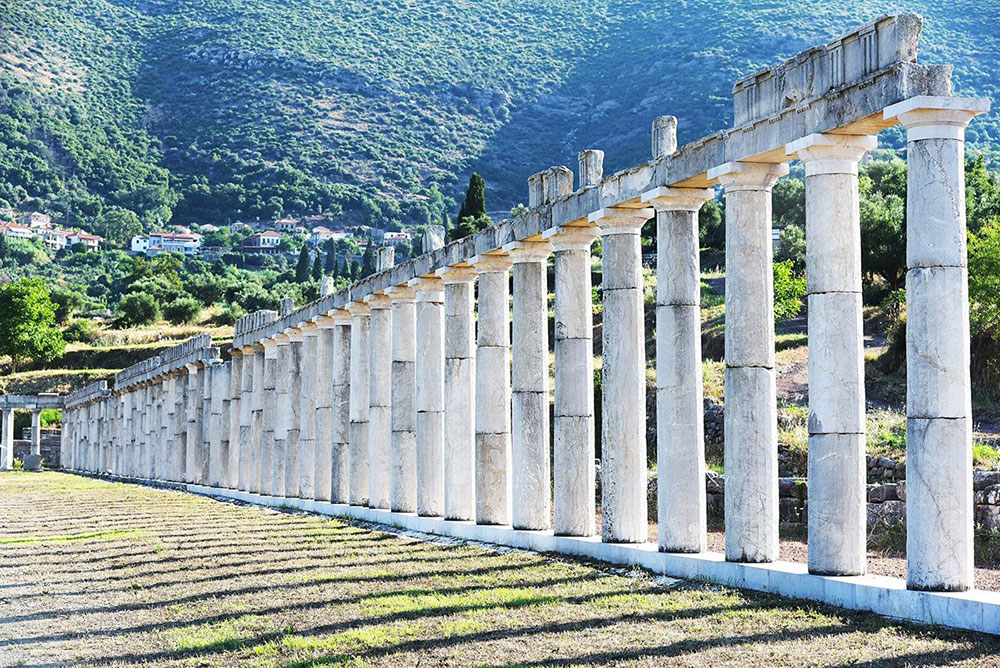
The ancient Messene was the capital of Messinia. It was near the present village of Mavromati in the western foothills of Mount Ithomi, entering from Arcadian Gate. Ithomi was the strongest natural and artificial stronghold of Messinia. The city was founded by the Theban general Epaminondas in 369 BC, who freed Messenia from the Spartans. Messene reached maximum prosperity during the Hellenistic period.
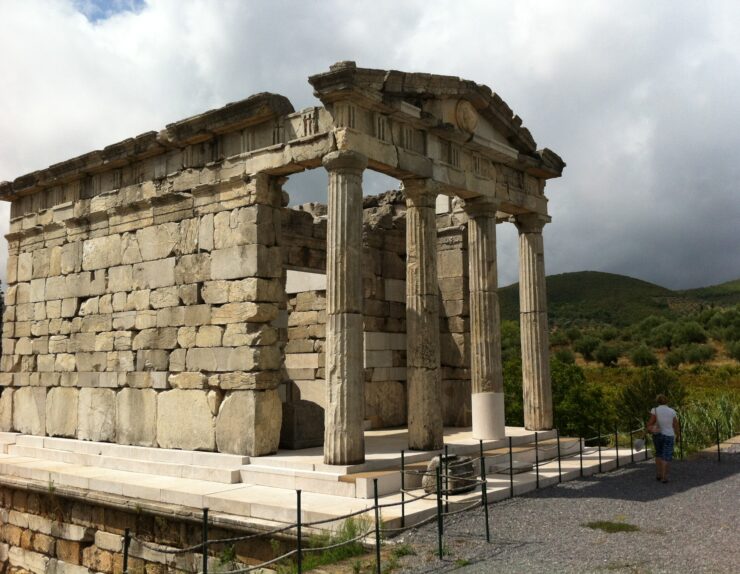
Ancient_Messene_stadium1
The first evidence of human settlement in ancient Messene goes back to the Late Neolithic period (4300-3000 BC) or the Early Bronze Age (2800-1900 BC). In 800-700 BC, the temple of Zeus Ithomata Ithome was in full operation. Located downtown, it founded the first temple of Artemis Orthia and the earliest of Asclepius. The early state of the Messenians is under long Spartan occupation (8th to 5th century BC), Recorded in four known historical events as the Messenian wars. The third Messenian War (510-490 BC) is connected with the name of the legendary hero Aristomenes. In the 4th Messenian War (464-456 BC), besieged for many years the citadel Ithome, and the revolt of the enslaved Messenians leads to capitulation.
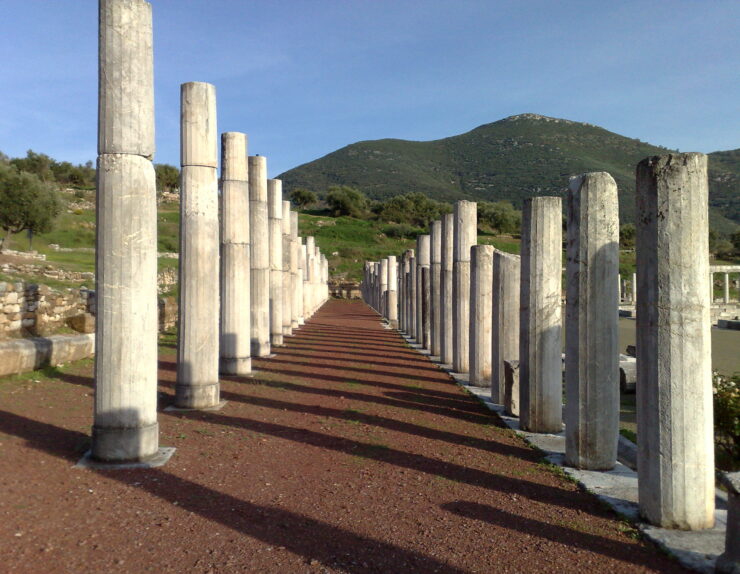
Ancient_Messene_Stadium3
The fugitive Messenians settled in Nafpaktos, while in 399 BC they were expelled by the Spartans and settled in Sicily and Cyrene. After the battle of Leuctra in Boeotia (471 BC) and the defeat of Sparta, the Theban general Epaminondas and Argive allies establish the independent state of the Messenians (369 BC). The new capital was built beneath Ithomi, fortified with powerful and imposing city walls, called Messene, named after the mythical before Dorians Queen.
The ancient traveler Pausanias visited Messene (155-160 AD). At this time the city is still an important political and cultural center, with public religious or secular buildings in good condition, and retains an unchanged Ippodamius building of tissue. It has, among other things, the rare privilege not been destroyed or covered by younger settlements and is an eminently Mediterranean untouched natural environment. This natural environment combines the mountain grandeur of Delphi and the low riverine serenity of Olympia with the dominant bare limestone volume of Ithome, where the citadel is, and the low fertile valley around the ancient city.
Ancient Messene was protected from the northeast by a natural wall by Mount Ithomi. The rest of the city was surrounded by almighty walls approximately 9.5 km, which one can still admire today.
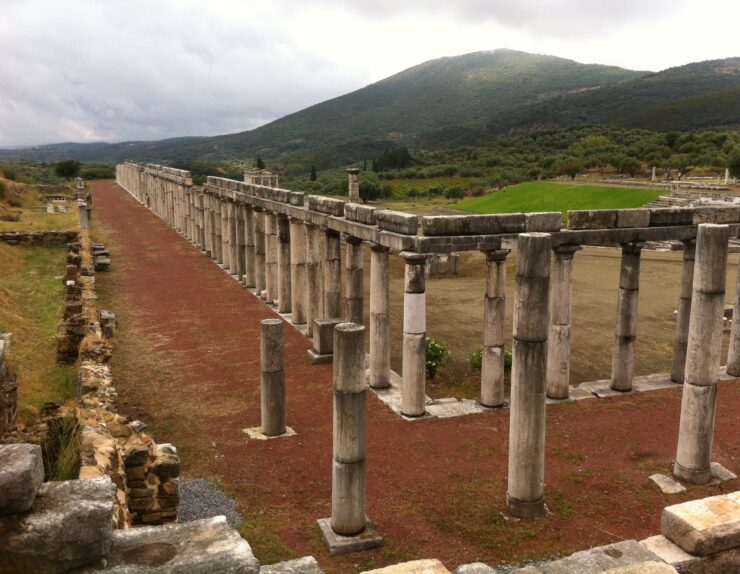
Ancient_Messene_stadium
All buildings of Messene have the same orientation and are integrated into the grid produced by horizontal (east-west) and vertical (north-south) streets. The urban system is known as the Hippodamus, from the initial inspirer and creator of architects, surveyors, and astronomers of the 5th century BC, the Hippodamus from Miletus.
Noteworthy is that the predetermined shape is based on the principles of fairness, equality before the law, and equal shares, i.e., the virtues of democracy, characterized by extreme geometrismo, adjusted each time the specific geomorphological and climatic conditions of the country are harmoniously integrated into the natural environment .
Systematic excavation and restoration work of ancient Messene is going on, under the auspices of the Archaeological Society and the direction of Professor Peter G. Themelis.
An archaeological site of Ancient Messene means that it is enclosed within the fortification. The Archaeological Museum, including Mount Ithomi, the citadel, and the sanctuary of Zeus Ithomata near the old monastery Voulkanou or Vourkanou.
Also, it includes the sacres of Eileithyia-Curetes and the sanctuary of Artemis Limnatida, on the northeastern slopes of Mt. In the current village, Mavromati, is the ancient fountain Klepsidra that supplies water to the site today.
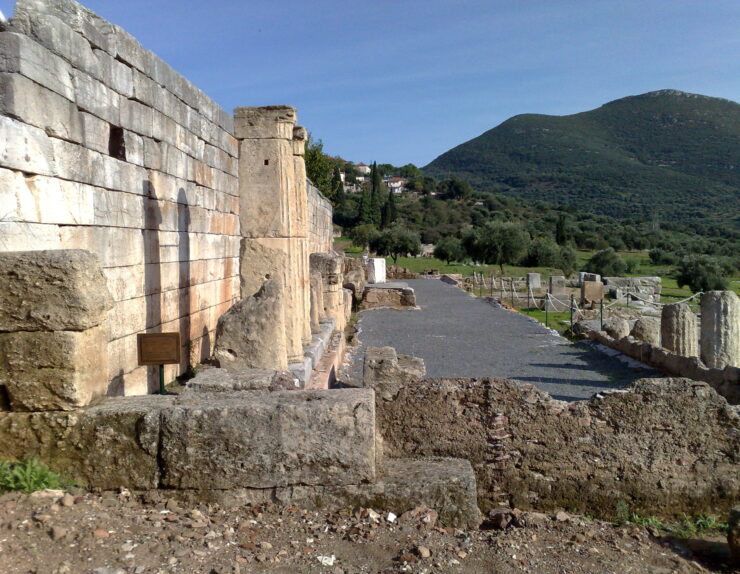
Ancient_Messene_11
It had two gates, the Arcadian Gate (or Gate of Megalopolis) and the Laconian Gate. This last gate was destroyed in the 18th century, but the Arcadian Gate is still preserved in fairly good condition. In fact, it was the city’s landmark for the first travellers, who liked to depict it in their engravings. It is an enormous and imposing circular gate with two entrances, one interior and one exterior.
The main archaeological site is developed on a slope, from north to south. Northwest of Asklepios revealed the first sanctuary of Artemis Orthia, and near it, the sanctuary of Demeter and the Dioscuri, which cannot be visited. Near the south portico of Asklepios, a loaded inscribed pillar bearing engraved votive seven cities of Greece in honor of Messinian Damofontos, Damofontos the sculptor who worked predominantly in Asclepeion.
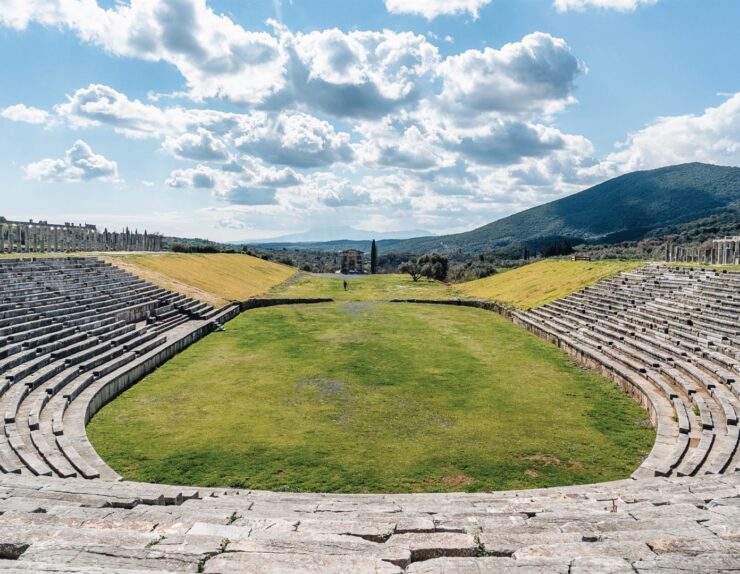
Ancient_Messene_Stadium
Broad Street heads west of Asklepios and ends at the monumental entrance of the Gymnasium of Messene. That was surrounded by three U-shaped galleries in the city stadium. Was this a single functional and architectural ensemble where races were held and trained teens? Along the western portico of the Gymnasium developed rectangular buildings, where they had erected great artwork, copies of important sculptors of antiquity, like Hermes, Theseus, Hercules, Doriphoros, and more.
Messene Theatre
The Theatre of Messene, which only had an indirect reference by Pausanias, was discovered NW of Asklepios and 50 west of the Agora. Constructed in the 3rd-2nd century B.C., it is of the greatest antiquity. The amplitude reaches 98.60 m, and the diameter of the conductor is 23.46 m. It was used for recreation of citizens but also for political gatherings, as evidenced by epigraphic discoveries.
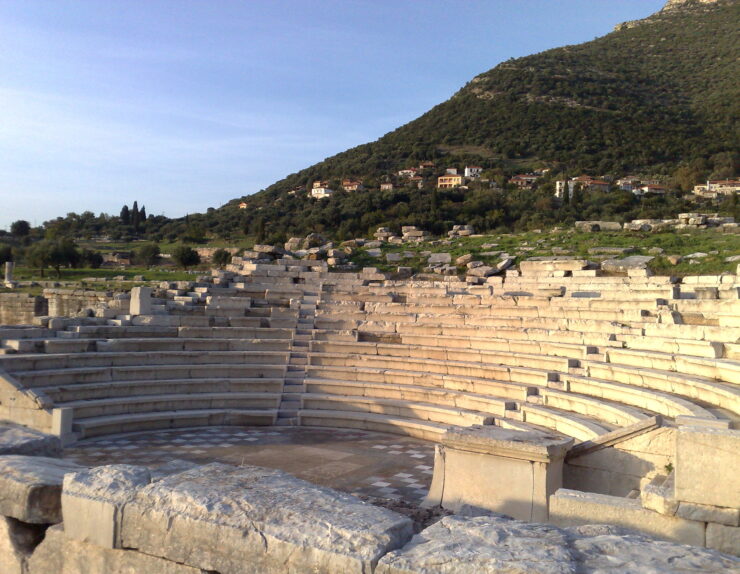
Ancient_Messene_asclepeion2
Arsinoe Fountain
The large fountain structure, revealed between the theater and the great north portico of the Agora of Messene, is identified with the Fountain Arsinoe, which informs us of Pausanias. According to him, the fountain was named after Arsinoe, daughter of the legendary king of Messenia, Leucippus, and mother of Asclepius. Byzantine Basilica
Remains of the basilica were discovered behind the west side of the huge market and SSE of the Grand Theatre of Messene. The temple, measuring 16 x 38 m., seems to have been built in the late 7th century AD with building material from earlier buildings.
Fortifications of Messini
The imposing fortification walls of Messene with gates and towers mark the reestablishment of the free Messenian state after the battle of Leuctra (371 BC) between the Theban general Epaminondas and Argos allies. In 369 BC, founded within the walls, beneath Mount Ithomi, the new capital of Messene, a homonym of the prodorikis, queen. Pausanias recognizes the supremacy of the fortifications of Messene compared to other famous eras.
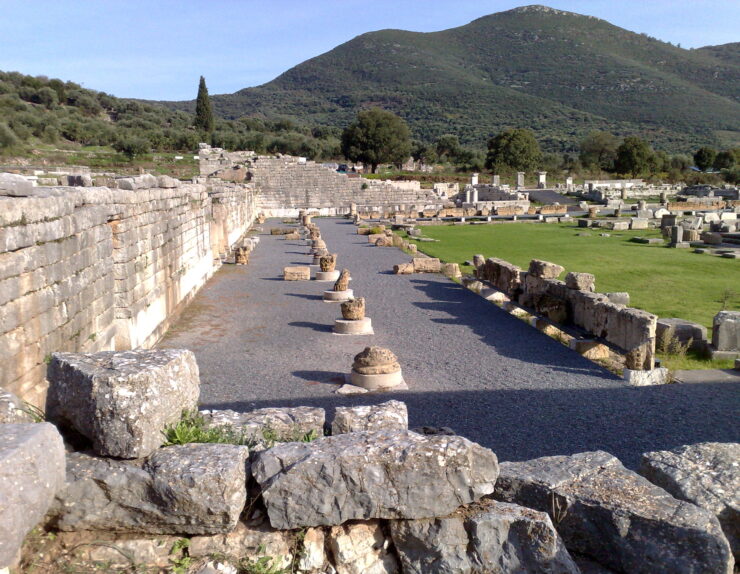
Ancient_Messene_12
Descending from the village of Mavromati, meet the museum. Passing through vineyards and olive groves, we see right in the theater of ancient Messene with towering walls and leave the Fountain Arsinoe. Continuing on a narrow trail, we see the market on the left side and soon after, the sacred site of Asklepios. This small museum was built in 1970 with funds from the Archaeological Society and Plan A. Orlandou. The museum consists of three rooms, which are mostly sculptures.
Meligala Mavromati (Prefecture of Messinia)
Phone: +30 27240 51201
Email: lhepka@culture.gr